For lots of designs, it seems like the facing around the firebox… is effectively in the firebox. Does it make sense to use firebrick there instead of conventional facing materials (brick or concrete block for example)? Or do you not notice any issues with facing breaking down with the heat around the door thanks to insulation / flashing? @max do you happen to have any thoughts?

I just came across this example from a contraflow heater that Max built a while back. Looks like it is probably a good idea!
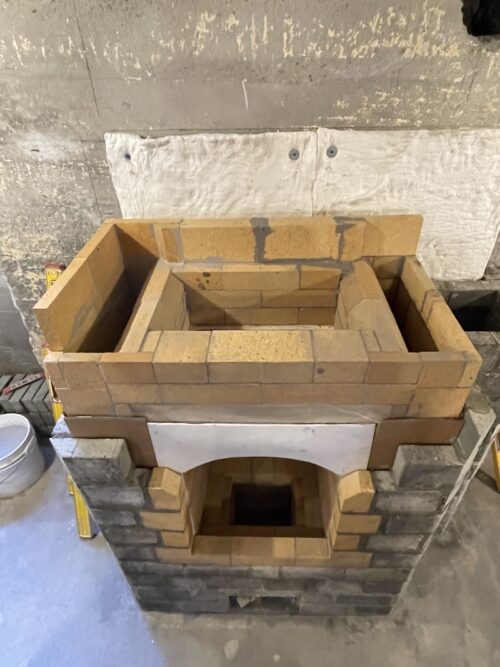
Yes, the photo above shows one approach when the facing will be plastered or tiled. For finished masonry (brick and stone), this approach involves only lining the firebox with firebrick splits so that the firebox door trims it out.
Our strategy has been evolving, however, towards using stainless steel flashing backed with additional insulation to protect the facing at the firebox opening.
The combination of the stainless steel and 1/4” ceramic paper insulation both protects the facing masonry from the direct flame as well as helps to keep the facing temperatures around the firebox lower to reduce expansion-related issues.
This drawing needs improvement to increase clarity but it shows how the firebox rough opening needs to be increased by 5/16” all around to accomodate for the trim.

The shorter leg of the angle trim is tucked into the expansion joint between the core and facing.
All this said, older heaters that I’ve built like this one…
…were built without much attention to this detail and are surviving/thriving well. That heater had a grate at the front and back of the firebox and the facebrick exposed to the intense oxidation of the fire at the front grate were spalling so we placed a piece of stainles angle backed with ceramic paper just on the bottom and it has been doing great and is ~15 years in service.
@Kaufman, perhaps you have photos of the stainless firebox facing trim installed?